

A SWOT analysis is a very useful tool to help you on your path to success. You can use it not only to identify opportunities and threats for the entire company, but also for individual departments. It will also help you clarify your strengths and weaknesses.
Do you take your business seriously? Do you know how you are performing in the market? What are your opportunities and threats? And are you aware of your strengths and weaknesses? If not, dedicate some time to creating a SWOT analysis. It might bring you closer to a new direction you can take or reveal weaknesses that you should work on.
SWOT analysis, what does it contain?
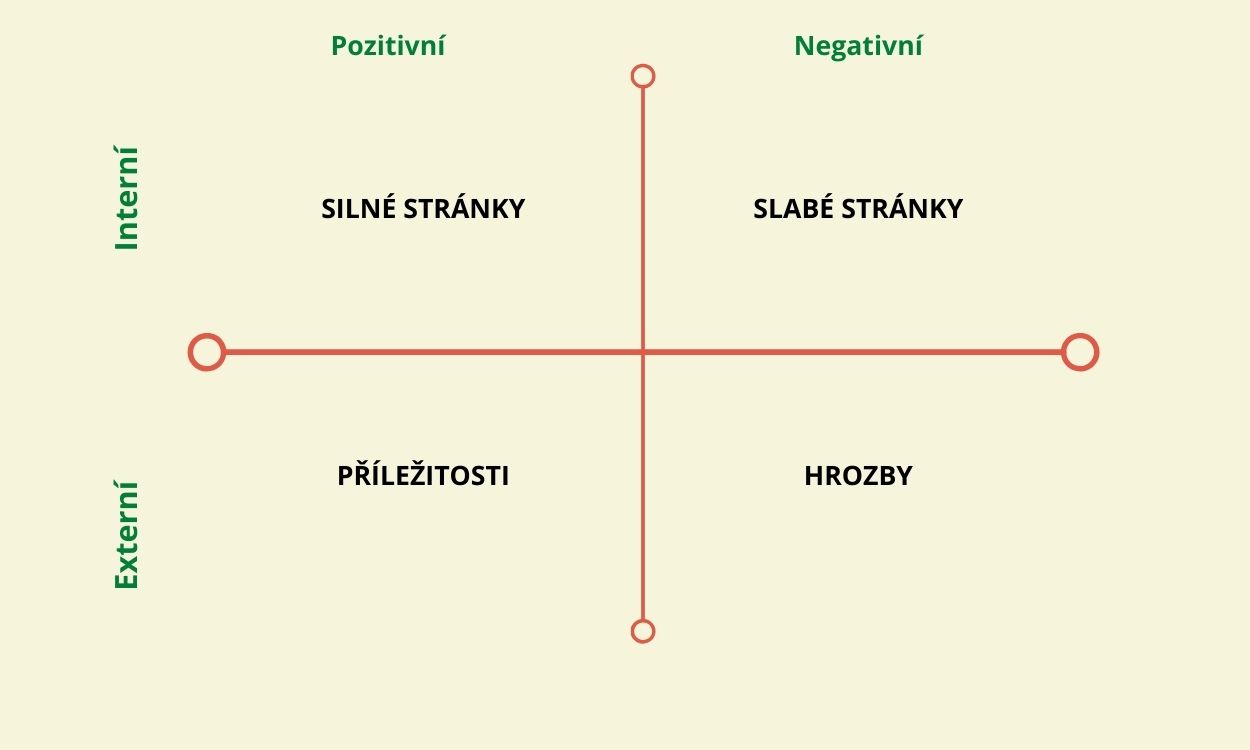
It is a table with 2 columns and 2 rows, a matrix. The first row relates to internal matters. The first column in that row contains strengths. The second column contains weaknesses. The second row contains external circumstances and includes opportunities and threats.
You can also read the matrix by column. The first column contains positive points (strengths and opportunities) and the second column contains negative points (weaknesses and threats).
Personal SWOT analysis?
Yes, why not. You can even create a personal SWOT analysis. Are you perhaps part of a sports team and interested in your future possibilities? Or are you simply thinking about where to go in life. This analysis helps you gather all possible information and might push you forward. You will discover, or be reminded, of something that might surprise you greatly. It is necessary to think deeply about all parts, not just superficially. Allow yourself several days to complete the analysis. Discuss the individual points with those around you; they might have an interesting observation.
How to work out the analysis
Each field needs to be filled in carefully. Think of at least 5 things for each cell. It might seem impossible at first, but don’t be discouraged. You don’t have to complete this exploration of new possibilities immediately, or even in one day. You can always think of something when you feel you can’t think of anything new. The greatest treasure is hidden in these things that are not immediately visible.
Internal environment
Or the internal part. It is located in the first row and includes:
Strengths (S = Strengths)
- What are you better at than the competition?
- What are your advantages, a great product, a good image, tradition?
- Why do customers/clients buy from you?
- What is their reason for returning to you?
- Well-established and functioning software, perhaps created to your specifications.
- Patents, licenses.
- …
This includes your skills, know-how, resources, prices, abilities, successes, etc. But be careful, if you are, for example, a German teacher, then German does not belong to your strengths. That is a necessity to perform this need. Your strength might be, for example, a high level of knowledge of this language.
Weaknesses (W = Weaknesses)
- Lack of qualified people.
- Worse location of the company and therefore worsened accessibility for employees.
- Some disadvantages of the product/service.
- Higher costs.
- Little money for employees.
- …
Here, you need to honestly admit where you are lagging. Openly. Don’t be afraid to say out loud what everyone in the company already knows. Once you focus on your weaknesses, you can decide what to do with them. Will you leave the situation as it is? Or can your weaknesses be turned into strengths?
External environment
Or the external environment. It is located in the second row of the table. Monitor all possible significant areas here: political, economic, social, technological, legislative, ecological (PEST analysis)
Příležitosti (O = Opportunities)
What are the possibilities for developing your company or individual departments? And what about strengthening your position in the market, how can you achieve this? Identify your opportunities and use them to achieve success.
- Entering a new market, abroad
- Including a new target group, perhaps with a small product modification
- What is missing in the market
- Building customer loyalty
- Using new technologies, more modern ones
- Considering and using possibilities for grants
- Establishing cooperation with new partners
- …
Hrozby (T = Threats)
These come from the external environment and are impossible for you to influence. They can harm your company or even liquidate it. When you identify your threats, you can work in advance to reduce their impact in case they arise. It is good to not only identify threats but also to rank them according to the level of risk they pose to you.
- Force majeure, natural disasters
- Various regulations, changes in law
- Activity of new or existing competitors
- Bankruptcy of a main supplier/customer
- Increased fixed costs
- Frequent employee turnover
- Changes in trends
- New technologies
- …
SWOT analysis example
Let’s look at one small example. For example, a taxi driver.
Strengths:
- 12 regular clients
- A new, modern car on operating lease
- Can drive almost anytime, doesn’t have a family
- Has been working in the profession for a long time, knows all the shortcuts
- Can tune in to the client, knows when to be quiet
Weaknesses:
- Has problems with his bladder, must stop frequently
- Is particular about perfect cleanliness, higher costs
- They must repay debts.
Opportunities:
- Delivering not only people but also goods that people order or need to transport
- Planned new government measures
Threats:
- Public transport reduces its services
- Further alternative taxi services appear
- Low prices of competitors
- Danger of nightlife, unscrupulous practices of some night taxi drivers
In the example of the analysis, I have only listed a few points, for illustration. A more in-depth analysis requires much more time and, above all, a broad perspective on the issue.
Initial assignment
Before you dive into creating a SWOT analysis, be clear about what you want to achieve. Do you want to focus on the company in general, or on a specific department? Perhaps you want to modernise the accounting department, or you notice that your sales team is lagging behind. You can formulate the task for the SWOT analysis so that you want the sales department to bring in 25% more business within 3 years. You can use this analysis for specific smaller goals as well, not just for the whole.
Errors in the analysis
Sometimes, individual points can be misplaced. For example, opportunities may be confused with strengths, or weaknesses with threats. This division helps to clearly identify whether something is internal or external. Internal factors belong in either the weaknesses or strengths. External factors are either opportunities or threats. Each item can only appear in one place on the matrix.
I have a SWOT analysis, what next?
Have you successfully completed your SWOT analysis? Review each point and consider whether they can be described more specifically and in more detail. This will help with subsequent planning. If you are satisfied with the analysis as it is, the more difficult part begins. Look at each quadrant and clarify what it means for you. What will you do about your weaknesses? How will you address them? And what about opportunities? What will your company do to take advantage of new opportunities? And what about threats? What measures will you introduce to eliminate their impact?
Use the information to develop a strategic plan. Include the individual actions that will be carried out and the deadlines for completion. The more specific your plan is, the greater your chance of it not being lost among other documents.
Conclusion
Do you care about the future of your business? Do not underestimate the SWOT analysis. Dedicate some of your time to it and work it out thoroughly. Involve your employees in the process as well. Ask each of them to suggest 3 to 5 opportunities and threats for your business, and to mention the strengths and weaknesses of the company from their perspective. You can also do this in the form of an anonymous questionnaire, and employees will then be more open regarding the weaknesses of the business.
Do you have a moment? Read how inflation reduces the value of your money.
