


Cryptocurrency mining is a fairly common topic these days, but not everyone knows how it works, whether it pays off, what purpose mining serves in the first place and why it is so important. Today I will try to explain this to you. I will describe everything in relation to Bitcoin, but mining Ethereum and other currencies works on the same basic principle and differs only in small details.
How does mining work?
Before I can explain how it all runs, I need to describe how the blockchain works. The blockchain is the so-called ledger of cryptocurrencies. In the network you can act as a user, as a provider of so-called nodes and as a miner.
You become a user whenever you use bitcoin in any way. You buy it, sell it or send it to someone. You have used the bitcoin network, so your transaction is recorded in the blockchain.
A node provider is someone who has a device (called a node in English) that stores a copy of this ledger. Nodes verify the authenticity of transactions and the amount of currency held at various addresses or in hardware wallets. Nodes are essential for cryptocurrencies to work as we know and use them today. They give everyone the chance to own a copy of the blockchain and, together with many others, keep watch over the ledger.
The last group is miners. This is where things get a little more complicated. Miners combine transactions into so-called blocks and arrange them in sequence. One block is verified roughly every 10 minutes. A randomly generated number (nonce) is added to the block, and an algorithm is used to create a so-called hash. This is a unique code that serves as the “heading” of each block when it is saved to the blockchain. The hash of the previous block is also attached, which links the blocks to each other in order and makes them easier to follow.

That is how it works in the ideal case, which happens very rarely. This is because the generated hash must also have the right format, with the correct number of zeros. So if miners find a hash in the right format, their effort has been successful and they have mined new bitcoins.
If the hash comes out wrong, miners have to choose a new nonce and run the algorithm again. They repeat this until a valid hash comes out. The algorithm performs several million attempts per second and continues until it finds the right combination. Example of a valid hash:
0000000000000000000910c0e22e51c5f9c805ae7c11118a06321f1651ec77d8. This is why mining is so difficult and the number of possibilities is almost unlimited.
What is Bitcoin mining in simple terms
Bitcoin mining is the process that adds new transactions to the blockchain and releases new bitcoins into circulation. Miners compete to solve a mathematical puzzle, and the first one to find a valid answer gets to add the next block. This method is called proof of work, because the winner has to prove that real computing effort, and therefore real electricity, went into finding the answer.
The reward has two parts. The first is a fixed number of newly created bitcoins, called the block subsidy. The second is the transaction fees that users paid to have their transactions included in that block. The subsidy is cut in half roughly every four years in an event known as the halving, and the total supply is capped at 21 million bitcoins. Over time, transaction fees are meant to become a larger part of what miners earn.
How does Bitcoin mining work step by step
- Users send transactions, which wait in a queue until a miner picks them up.
- The miner selects transactions, usually those with the highest fees, and builds a candidate block.
- The machine keeps changing the nonce and calculating hashes until one meets the network’s difficulty target.
- The winning block is broadcast to the network, where nodes check that every transaction and the hash are valid.
- Once accepted, the block joins the chain, the miner receives the reward and everyone starts working on the next block.
Mining as security
Security works on a fairly simple principle. Because the whole network works together, it has enormous computing power, and the mining equipment cost billions of dollars. Anyone who wanted to attack the blockchain would need to own a mining network even bigger than the one currently mining bitcoin. They would need this to gain dominance, mine a block before everyone else and confirm “false” data in it. They could then, for example, send bitcoins from other wallets to their own wallet and the transaction would be treated as genuine. Today this is considered impossible, because the cost of doing it would reach incredible figures.
Another part of the security is that the valid blockchain is always the longest one. Other miners take it over and keep building on it. No side branches are created and everything continues in a single chain.
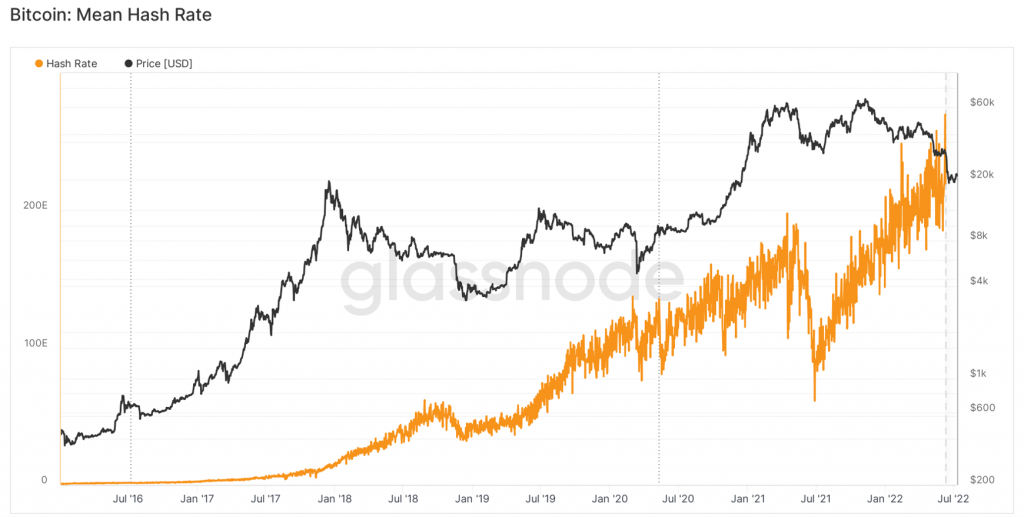
Last but not least, Bitcoin can adjust the mining difficulty. At the beginning, only one computer mined BTC and it created a block in 10 minutes. Adding a second computer cut that time in half, and so on. To keep the regular ten-minute interval, the bitcoin network raises the mining difficulty in proportion to the computing power.
Mining machines
Any computer with an internet connection can be considered suitable for mining. However, that does not mean mining will be profitable for you. You need a powerful computer, above all a graphics card that does not use too much electricity, and in the current situation also a good fixed electricity price from your supplier.
CPUs (processors) used to carry much of the mining workload, but today most of the work is done by GPUs (graphics cards). The change happened because of electricity consumption, which was higher for processors than for graphics cards.
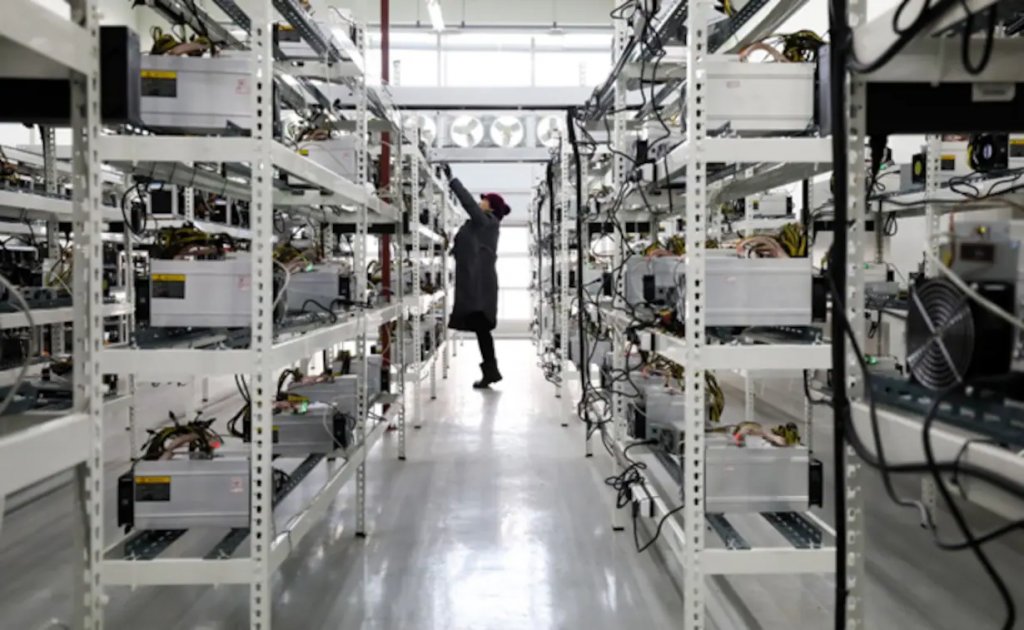
Asic machines are special mining machines. They can do only one thing: mine. Nothing better is available, as everything is optimised exactly for this purpose. They are most often used to mine Bitcoin. These Asic machines usually do not even go on sale to the general public. Most of them end up in huge halls with hundreds of identical machines. They cost around 200,000 CZK (about 9,200 USD) each, depending on the model.
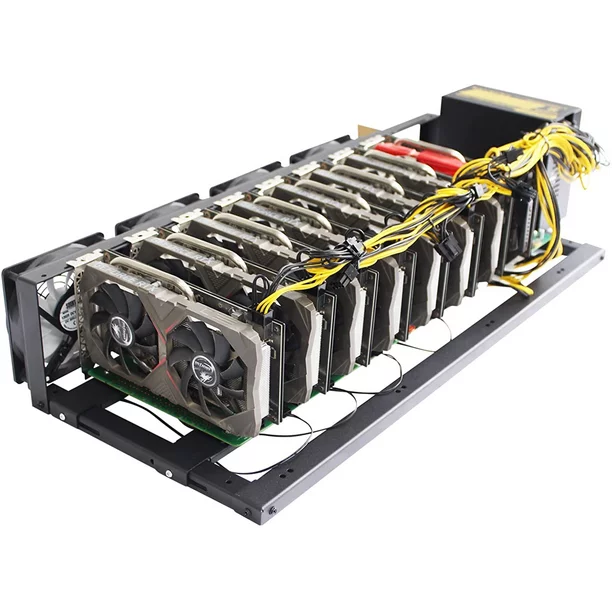
The most affordable solution for other enthusiasts is a so-called rig. This is a modified version of an ordinary computer. You take all the usual components, assemble them in a box-shaped metal frame, add several powerful graphics cards and you are ready to go. Rigs most often contain 6 to 8 graphics cards, 2 motherboards, 2 power supplies, RAM, a processor, drives and plenty of cooling. Most miners build them themselves, but you can also buy them ready-made on various second-hand marketplaces. Prices start at around 20,000 CZK (about 920 USD) for less powerful rigs and can climb into the hundreds of thousands of CZK as performance increases.
You can calculate whether mining would pay off for you on websites such as Nicehash.
Is Bitcoin mining still profitable?
Whether mining pays off depends on a handful of factors that change all the time. You compare the value of the bitcoin your machine earns with everything it costs you to run it. The main factors are:
- Electricity price. This is usually the biggest ongoing cost, so even a small difference per kilowatt hour matters.
- Machine efficiency. Newer machines produce more hashes for the same amount of energy, so older models fall behind.
- Network difficulty. As more computing power joins, your share of the rewards shrinks.
- Bitcoin price and halvings. A falling price or a halved block subsidy can turn a profitable setup into a loss.
A simple illustration: if your machine earns bitcoin worth $10 a day and uses $8 of electricity, you keep $2 a day before pool fees, cooling and repairs. At that rate, a machine costing $5,000 would take years to pay for itself, and a single difficulty increase could wipe out the margin entirely.
Common mistakes include ignoring the cost of cooling and noise, assuming today’s bitcoin price will hold, buying outdated hardware because it looks cheap, and forgetting that the reward drops after each halving. For most households with ordinary electricity tariffs, buying bitcoin directly is simpler than mining it.
Mining pools
These are groups of people who work together on mining in a closed group and share the coins they earn. A pool combines the computing power of all its members, and the profit is shared according to the power each member contributes. A single machine on its own would take a very long time to find the right hash. In a pool, miners find the right hash together more often, so everyone gets a more regular income. Today, most mining computers are part of a pool.

Most mining takes place in China, specifically 65%. Chinese pools include F2, Ant, ViaBtc, Poolin, BTC.com and many others. This is mainly due to cheap electricity, which on the other hand casts a bit of a shadow over cryptocurrencies. Many people object to the environmental footprint this process leaves behind, because China gets most of its electricity from non-renewable sources.
You might also be interested in How to buy Bitcoin.
Is Bitcoin mining legal?
In many countries, mining Bitcoin is legal and treated like any other business activity. Some countries have banned or restricted it, often because of its electricity use or a broader stance against cryptocurrencies. The rules can also change, so it is worth checking the current situation where you live before you buy any equipment.
Even where mining is allowed, other rules still apply to you. Mined coins are often taxed as income when you receive them, and selling them later may create a further tax obligation. Running loud, power-hungry machines at home can also raise questions with your landlord, your electricity supplier or local noise regulations.
Frequently asked questions about Bitcoin mining
What is Bitcoin mining?
Bitcoin mining is the process of verifying transactions and adding them to the blockchain in new blocks. Miners use computing power to solve a puzzle, and the winner receives newly created bitcoins plus transaction fees. The same process also keeps the network secure.
Is Bitcoin mining profitable?
It can be, but only when your electricity is cheap and your hardware is efficient. Profit depends on the bitcoin price, network difficulty and the current block reward, which all change over time. Use a profitability calculator with your own electricity price before you spend anything.
Is Bitcoin mining legal?
It is legal in many countries, but some have banned or restricted it. Where it is allowed, you usually have to declare mined coins for tax purposes. Check your local rules before you start.
What is a Bitcoin mining machine?
Today it is usually an ASIC, a device built only to calculate the hashes Bitcoin needs. It is far more efficient than a regular computer or a graphics card rig for this task. Its drawback is that it cannot be used for anything else.
USD amounts are approximate, converted at the Czech National Bank rate of 21.80 CZK per USD on 2 October 2026.
