


Every one of us has applied for a job at some point. If you open any job vacancy, it usually no longer contains only requirements for the length of experience or level of education. Much more often, advertisements also include requirements for communication skills, flexibility, independence, and so on. These requirements include precisely those soft skills that this article is about. Often, these skills are clichés, and even people who do not possess them have them on their CVs.
What are soft skills?
By soft skills, we mean human behavioural skills that stem from a person’s personality traits. They are related to emotional intelligence. Soft skills form an important part of a person’s professional competence. They determine how a person is able to communicate and cooperate with other people. They are also called “interpersonal skills”, and it is quite possible that some employees value them more nowadays than hard skills.
Hard skills, on the other hand, demonstrate a person’s professional qualifications, including, for example, practical experience, education, or length of experience.
What is included in soft skills
There are really many soft skills, but some of them are more in demand than others. The most sought-after on the job market include:
- communication skills
- teamwork skills
- leadership
- assertive behaviour
- responsibility
- time management
- ability to work under pressure
- ability to resolve conflicts and negotiate
Communication skills
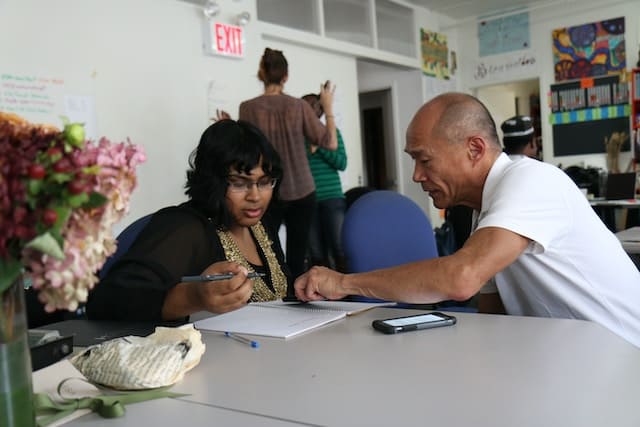
One of the highly sought-after skills in the job market is the ability to communicate correctly. It is the ability to express one’s thoughts clearly and comprehensibly, while also listening to others. People who can communicate effectively know how to adapt their delivery to their listeners, and can reach an agreement or resolve a conflict sooner.
Teamwork skills
This is also one of the very important qualities. Not everyone has this ability naturally, but everyone can work on it. It is the ability to work in a team and contribute together to its success. It also includes the ability to listen to each other and sometimes also to suppress one’s ego and accept someone else’s idea.
Leadership
The ability to lead people carries with it other important skills, such as making quick decisions or motivating and inspiring others. If you state that you have mastered this skill, it is good to mention a specific situation during the interview when you led people to a successful outcome.
Assertive behaviour
This is closely related to communication skills. It is the ability to assert one’s opinions, wishes, or needs calmly and in a balanced way without aggression. Assertiveness is based on balance, where it is not only important to share one’s opinions, but also to listen to other people and their opinions. When expressing our thoughts, however, we should appear calm, balanced, and stand our ground.
Responsibility
An employee at work does not only take responsibility for themselves and their actions, but should also partially take responsibility for the company and its direction as such. However, it is important to learn to take responsibility not only for one’s duties, but also for one’s decisions and actions. This includes the ability to accept feedback, admit one’s mistake, take responsibility and acknowledge the consequences of one’s actions, and finally, the ability to apologise if appropriate. This is an ability that many people still lack today. However, it is possible to work on it, just like all other soft skills.
Time management
Simply put, time management is the ability to organise one’s time correctly. The number of tasks in both our professional and daily lives is increasing. It is necessary to know how to set priorities, focus on results rather than just the work tasks themselves, and it is also necessary to know how to determine the time you will need to complete a given task. It is also necessary to include room for rest. However, finding room for rest is becoming much more challenging with a person’s constant availability on email and phone. But it is extremely important in order to achieve the best possible work results, while at the same time avoiding professional burnout.
Ability to work under pressure
Stressful situations are a common part of our lives, and not just our professional lives. Stress simply cannot be avoided. Sometimes the number of work tasks simply increases, a higher level of commitment is needed, and the pressure on employees is great. In such a case, it is very important for a person to manage their work and personal life even under this pressure. This is where quality time management comes into play again, without which it is not very well possible to arrange priorities and allocate time correctly. After all, it is not so much what happens that matters, but how we react to it.
Ability to resolve conflicts and negotiate
Both abilities are a prerequisite for a good manager. The objective goal is to reach an agreement that will be beneficial to both parties, and at the same time to resolve conflicts to the satisfaction of everyone involved. It is not an easy task, but it is definitely essential when dealing with many work situations.
In general, there is a large number of soft skills. Fortunately, you can constantly develop these skills. It is quite possible that in the future, soft skills will be much more important to employers than hard skills. After all, there are computers and artificial intelligence that can replace hard skills in humans. But nothing can replace a human with their soft skills. If you would like to work on your soft skills, try looking at courses that expand these skills, for example here. And if you already possess these skills, try looking at this article of ours, where you will find out what the best-paid jobs are, and perhaps it will inspire you to change jobs.
Soft skills vs hard skills and why you need both
The difference between the two is easiest to see in how each type is learned and checked. Hard skills are specific and measurable. You can prove them with a certificate, a test or a portfolio. Soft skills are harder to measure and usually show up in how you behave over a longer period.
- How you learn them. You gain hard skills through study, courses and training. You build soft skills mostly through experience, feedback and practice.
- How they are tested. Employers check hard skills with exams, practical tasks or certificates. They judge soft skills through interviews, references and your behaviour during the trial period.
- How transferable they are. Hard skills are often tied to one field, tool or profession. Soft skills carry over to almost any job.
Take an accountant as an example. Knowing accounting rules and spreadsheet software are hard skills. Explaining a tax problem to a worried client in plain words, or keeping calm before a deadline, depends on soft skills. Most jobs need a mix of both. Hard skills often get you the interview, while soft skills affect how well you fit in and how far you progress.
How to show soft skills on your resume
Because many applicants use the same words, a bare list of soft skills on your CV tells an employer very little. What works better is evidence. You can follow these steps.
- Read the job advertisement and pick the two or three soft skills it stresses most.
- For each one, find a concrete situation from your work, studies or volunteering where you used it.
- Describe the result in your work experience section. Instead of writing ‘good communication skills’, write something like ‘trained five new colleagues and wrote a guide the whole team now uses’.
- Add honest numbers where you can, such as the size of a team you led or a budget you managed, for example $50,000.
- Prepare a short story for each skill so you can expand on it at the interview.
Common mistakes to avoid
- Listing skills you cannot support with any example.
- Using vague phrases such as ‘team player’ or ‘hard-working’ without context.
- Listing ten or more soft skills, which makes none of them stand out.
- Claiming a skill your CV itself disproves, such as attention to detail in a document full of typos.
More soft skills examples worth knowing
Besides the skills described above, job advertisements often mention the following ones.
- Adaptability means coping with new tools, processes or changes in the team without losing productivity.
- Problem solving means finding the cause of a problem and proposing a workable solution.
- Critical thinking means assessing information carefully before you act on it.
- Creativity means coming up with new ideas or better ways of doing routine work.
- Empathy means understanding how colleagues and customers feel and responding to it.
- Self-motivation means working steadily without constant supervision.
- Reliability means keeping your promises and delivering work on time.
You do not need to master all of them. Focus on the ones that matter most in your field and develop them gradually.
Frequently asked questions about soft skills
What are soft skills in simple words?
Soft skills are the personal and social abilities that shape how you work with other people and handle your own work. They include communication, teamwork, time management and dealing with stress. Unlike technical knowledge, they apply in almost any job.
What are some examples of soft skills?
Common examples include communication, teamwork, leadership, assertiveness, responsibility, time management, adaptability, problem solving and empathy. Employers usually name the ones most important for the role in the job advertisement.
What is the difference between soft skills and hard skills?
Hard skills are specific, measurable abilities such as using software, speaking a foreign language or knowing accounting rules. Soft skills relate to behaviour and personality, such as how you communicate or cooperate. Most jobs need a combination of both.
Which soft skills should I put on my resume?
Choose the two or three soft skills the employer highlights in the advertisement and that you can genuinely prove. Show them through concrete results in your work experience rather than in a long list. Be ready to give real examples at the interview.