

You have probably heard the term “turnover” before. How is this figure useful, for example when you are looking for a new job? How much attention should you pay to it? In the following paragraphs, we explain all of this, with sample calculations.
What is the definition?
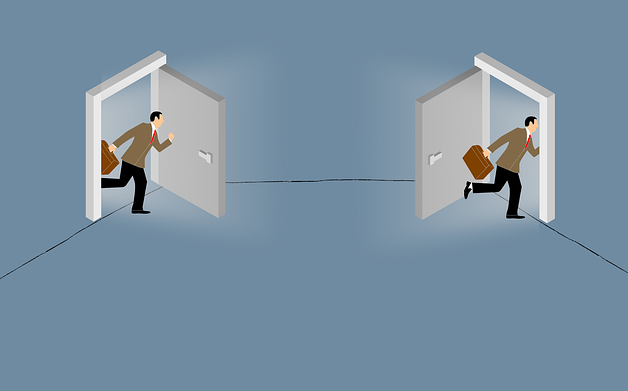
The word “fluctuation” comes from Latin and means moving back and forth. It describes irregular movement. More specifically, we are talking about employee turnover. This means the replacement of a worker or workers in a particular job or jobs.
Types of turnover
Voluntary vs involuntary
- Voluntary turnover is when an employee decides to leave the job at their own request
- Involuntary turnover, on the other hand, is when an employee is dismissed
Both have certain consequences. If an employee leaves voluntarily, they have probably already found a new job. However, the company they are leaving has to pay the costs of finding a new worker and training them.
An employee’s involuntary departure can also cost the company money if the worker is entitled to severance pay. There are also costs for the state, which has to pay unemployment benefit (podpora v nezaměstnanosti) and cover social security and health insurance contributions.
Turnover can also be divided into desirable and undesirable. In some respects, this may overlap with the division above. In economics, we would certainly describe this division in detail too, but for our purposes this is enough.
How do we calculate turnover?

Example
The company Ptáček s.r.o. currently employs 1,000 people. Since the beginning of the year, 200 employees have left. The turnover rate is as follows:
200/1,000 x 100 = 20%
If only 50 employees had left in the same year, for example, the turnover rate would be just 5%.
What percentage is still normal?
In Czech companies, turnover is around 15% on average. A rate of 5 to 7% is considered ideal. If the figure is over 20%, we can say it is beyond healthy turnover.
Why do employees leave?
There can be many reasons, but one of the most significant is pay. If it is inadequate or does not rise regularly, for example, employees will logically start looking elsewhere. Other reasons may include:
- poor work organisation
- dysfunctional relationships at work
- ineffective career progression
- moving house or long-term illness
Less attractive or less prestigious jobs also tend to have higher turnover. The same trend can be seen among younger workers, who want to keep learning and move on to something better. On the other hand, which jobs are attractive and, let’s say, the best jobs?
Impact on companies
A high turnover rate is a problem for companies, because recruitment and training costs are many times higher than when the figures are normal. Problems also arise when highly qualified employees start to leave, even in smaller numbers, because replacing them tends to be more difficult and much more expensive. This therefore affects the company’s financial results.
Why is it important to pay attention to this figure?
If you are looking for a new job and you know that a company’s staff change frequently, this may be a sign that something is wrong at the company where you want to apply. We recommend looking up reviews of the company or asking in a group so that you learn as much as possible about it. This way, you can avoid unpleasant situations.
