
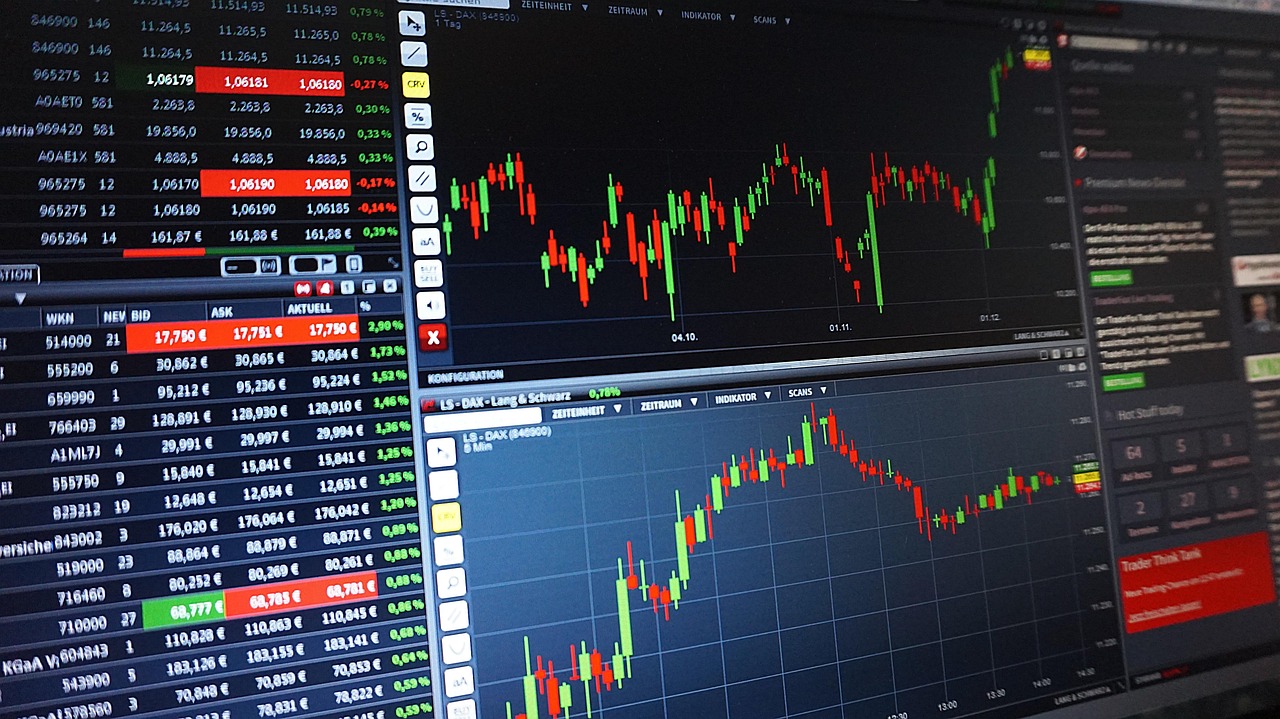

Trading on the stock exchange is attracting more and more people. The chance to earn money from anywhere, keep your finances under control and build financial freedom sounds appealing.
But most beginners hit a wall before they can even catch their breath. So what does it mean to start on the stock exchange the right way, and above all, how do you stay in the game for the long term?
Start safely, without risk
Your first steps should be about understanding the principles, not about making money.
The ideal start is on a demo account, where you learn the platform, the basic terms and how markets react.
The stock exchange is not a casino. It is a place where you learn to manage risk and make well-considered decisions.
A beginner should know that the stock exchange can gradually improve our financial situation, but it does not come for free. First you need to educate yourself and gain experience. At the start, there is work ahead of us, both with learning and with gaining experience.
How does investing in stocks work
When you buy a share, you buy a small part of a company. You become a co-owner, and the value of your share follows how the company performs and what other investors expect from it in the future.
You can earn money from stocks in two ways. The first is a rise in the share price, which you realise when you sell for more than you paid. The second is dividends, which are the part of its profit that a company pays out to shareholders. Neither is guaranteed. Prices can fall and companies can cut or stop their dividends.
Shares are bought and sold on stock exchanges, and as a private person you reach them through a broker. It also helps to know the difference between trading, where you try to profit from short-term price movements, and investing, where you hold good companies or whole markets for many years.
Focus on the process, not the result
Profit is the result of a good process.
Keep track of when and why you enter a trade, how long you hold it and what leads you to do so.
Learn from your results, not only from your successes but above all from your losses. At the start, the goal is not to win but to survive and understand the market. To learn the process, it is a good idea to test everything on a demo account.
If you are really serious about the stock exchange, your first failures will not put you off. They will leave you cold, because that is not what this is about. How can you learn something when you have neither experience nor knowledge?
Risk and emotions, your two biggest opponents
Every trader has to master two things: managing risk and managing themselves.
You limit risk by never staking more than you can afford to lose.
You tame emotions with discipline: a clear plan, limits and patience.
On the stock exchange, the winner is not the one who is right, but the one who stays calm when the market goes crazy.
How to manage risk and emotions
To manage emotions and risk, we need to find someone who makes a living on the stock exchange and has long-term results in it. This is the hardest task at the start. Usually, such a person will not teach you for free. You buy access to their education system and start studying.
Step by step, you will try out what you have learnt in their course and start applying your first knowledge. One trade will work out for you and the next one will not.
You need to keep going with this learning process and not expect too much from your results straight away.
At the start, you may not want to tell your friends that you are interested in the stock exchange, because they will only care about your results. This can be frustrating, because you are working on yourself and the results are not there yet.
EUR/USD is a good choice for beginners
For beginners, it definitely makes sense to focus on the Euro/US Dollar (EUR/USD) currency pair on the FOREX market, for a few simple reasons.
- EUR/USD is the most liquid currency pair in the world, which means a lower risk of unexpected swings and better trade execution.
- This pair offers very extensive, high-quality analysis, which makes it easier for someone who is just starting out to find their way around.
- The movements of the EUR and USD are influenced by tangible factors such as macroeconomic data, monetary policy and geopolitical events, which helps a beginner better understand how the market works.
If you are interested in what specifically influences these currencies, take a look at the article “The dollar and the euro: what influences these currencies”.
The long term as the key to success
The stock exchange is not a sprint, it is a marathon.
Successful traders do not get carried away by short-term profits. They build stable capital, grow it at a sensible pace and take advantage of compound interest.
If you set realistic goals and stay consistent, the results will come.
How to start investing in stocks step by step
- Set your goal and time horizon. Money you will need within a few years usually does not belong in stocks.
- Build a financial cushion first. Have an emergency fund and pay off expensive debt, so you are never forced to sell at a bad moment.
- Choose a regulated broker. Compare fees, the markets on offer and how easy it is to withdraw your money.
- Decide what to buy. Individual shares need research. Index funds and ETFs spread your money across many companies at once.
- Invest regularly. Putting in a fixed amount every month reduces the pressure to pick the perfect moment.
How to start investing in stocks with little money
You do not need a large sum to begin. Many brokers offer fractional shares, so you can own part of an expensive share. A low-cost index fund with a regular deposit of, for example, $50 a month is a simple way to build the habit. With small amounts, watch the fees closely, because a fixed charge per trade can eat a large part of your return.
Investing in dividend stocks
Dividend stocks are usually shares of established companies that regularly share their profits. They can give you a steady income, and if you reinvest the dividends, you strengthen the effect of compounding. On the other hand, a high dividend can be a warning sign of a company in trouble, dividends may be taxed, and these companies often grow more slowly. Look at whether the company can afford its payouts, not only at their size.
Continuous learning and analysis
Markets change and we learn along with them.
Keep a regular eye on what is happening in the global economy and try new approaches, but always sensibly. Write down what you learn, test strategies and evaluate what works.
The stock exchange rewards those who think in context and keep learning throughout their lives.
✳️ Conclusion: on the stock exchange, those who stay in the game win
Starting on the stock exchange is easy. Staying there for the long term takes character.
Patience, discipline and respect for risk are what turn a trader into an investor.
It is not about quick wins, but about the long-term stability and freedom the market can bring you.
Common mistakes when investing in stocks for beginners
- Putting everything into one company. Diversification protects you when a single business fails.
- Following tips and trends. Buying what everyone talks about often means buying after the price has already risen.
- Checking prices every day. Frequent watching leads to impulsive selling during normal market drops.
- Ignoring costs and taxes. Fees and taxes reduce your real return, so know them before you start.
Final tip
If someone shows you how much they made on the stock exchange from a single trade, that does not mean they understand the stock exchange. They may simply have guessed the direction correctly. Ask them to show you their results over a year or longer. Only that shows whether they are an expert or a gambler.
Source:
- Intelligent Investors Club (Klub inteligentních investorů, KUB IN IN) | Link: https://klubinteligentnichinvestoru.cz/
- RRblog, stock exchange | https://radekryznar.cz/category/burza/
Frequently asked questions about investing in stocks
Is investing in stocks good?
Over long periods, stocks have historically been one of the ways to grow wealth faster than savings accounts. They also carry real risk, because prices can fall sharply and stay low for years. They suit you best when you invest money you will not need for a long time and spread it across many companies.
Is investing in stocks worth it?
It is usually worth it if you have a long time horizon, an emergency fund and the patience to sit through falls in the market. It is less suitable for money you need soon or if you would panic and sell during a downturn. Low fees and regular investing make a big difference to whether it pays off.
How do I start investing in stocks with little money?
Choose a broker with low fees that offers fractional shares or low-cost index funds. Set up a regular deposit, even a small one such as $50 a month, and keep to it. The habit and time in the market matter more at the start than the amount.
Is investing in dividend stocks a good idea for beginners?
Dividend stocks can be a calm starting point because they are often shares of stable companies that provide regular income. Do not choose them only by the highest dividend, as an unusually high payout can signal problems. Check whether the company earns enough to keep paying and remember that dividends may be taxed.