


We cannot imagine life without cars. Every family owns at least one car, and the number of cars in the Czech Republic grows every year. When buying a new car, we have three ways to pay for it. The first is paying in cash. However, not everyone has saved enough money for a new car. So the other options are a loan or leasing. It is worth noting that a different type of financing suits each person, and everyone is comfortable with different terms.
In this article, we look at the advantages and disadvantages of getting a car through finance leasing and operating leasing. We also explain the conditions for getting a loan and the different types of loans.
New or used car?
When you buy a new car, you do not have to worry about its history. In particular, you do not have to ask whether the car has been in an accident or stolen. A new car should simply be trouble-free. Apart from regular services and fluid changes, you do not have to deal with anything, because the warranty covers most faults. From a financial point of view, however, it is the biggest waste of money in our lives. Seriously.
There is a huge choice of used cars on the market, so we have a good chance of finding a car that meets our expectations at a reasonable price. The advantage of used cars is that they do not lose as much value. We do not need to fear that every used car has had its mileage turned back. Still, it is wise to bring a car mechanic to the inspection. A mechanic can spot hidden faults before we buy the car.
Loan
We all know what a loan is. When financing a car, it means borrowing money that we then use to buy the car. To get a car loan, we must meet several conditions. We must be of legal age. We must also be creditworthy (able to repay the loan). We must provide proof of income, personal documents and other important documents.
One of its advantages is that it can be arranged online. Banks also often offer flexible repayments, so we can repay a different amount each month.
The lender can be a bank or a non-bank company. To get a better overview, we can use one of the online comparison sites, or you can compare the best loans with us too. One of them is, for example, NavigatorUveru.cz. Online comparison sites let us choose the company that suits us in terms of conditions, interest rates and repayment period.
💡 Tip: Think carefully before taking out a car loan. Do you need a new car? Is it worth getting into debt for a car? Borrowing to buy consumer goods and non-essential items is one of the main signs of financial illiteracy.
Unsecured personal loan
This is the most common way to buy a car. Once we receive the money from a bank (or non-bank) company and use it to buy the vehicle, we become its owner. We can do with it whatever we want. This means we are not limited by the number of kilometres driven. We can lend the vehicle to anyone we like, and we can take out compulsory motor insurance and comprehensive insurance wherever it suits us best. We can also sell the car at any time, let someone else drive it long-term, or rent it out, for example. If we are self-employed, we can claim the purchase and running costs of the vehicle as tax-deductible expenses.
We usually choose the repayment period ourselves, based on our needs and means. In the case of early repayment, the bank may charge fees. We must also expect the bank to check us thoroughly before granting the loan, especially our repayment history. We must also prove our income from our employer. Self-employed people must provide their tax return. This is therefore a different type of financing from an operating lease or a finance lease.
Purpose-bound (secured) loan
With this type of loan, we commit in the contract to using the money to buy a car. A purpose-bound loan is usually secured by the car we buy. This means the owner of the car is the company that lent us the money to buy it.
We are not limited in the number of kilometres we can drive. However, we must not lend the car to a third party long-term without the company’s consent. We also must not make any structural modifications to the car. We become the owner of the car once the purpose-bound loan is fully repaid. If we are self-employed, we can also claim the purchase and running costs of the car as tax-deductible expenses. If we decide to sell the car before the loan is repaid, we must ask the lender for consent to the sale, or repay the loan first.

Leasing
In the case of leasing, it is more like renting a car. The buyer rents the car for the repayment period, because we are not the owner, the leasing company is. This remains the case until we have paid all the instalments.
Car on a finance lease
Finance leasing is usually used by ordinary people who want a car but have not been approved for a loan. The disadvantage is the repayment period set by law, which must be at least 3 years and at most 7 years. Early repayment is not possible.
A big advantage is that we can get a car even with a lower income. With a finance lease, it is expected that we will buy the car at the end of the lease. The first payment, the down payment, is usually higher, typically 30% of the car’s price. The vehicle insurance is paid as part of the monthly instalments. We pay the running and maintenance costs ourselves.
Car on an operating lease
Operating leases for cars are mostly used by businesses for business purposes. With an operating lease, we are not expected to buy the car at the end of the lease, but the option exists.
Insurance, maintenance and servicing costs are left to the leasing company. However, this means higher instalments than with a finance lease. With an operating lease, we do not have to pay a down payment. A major disadvantage is the limited number of kilometres we can drive. This is usually up to 20,000 kilometres a year, and the leasing company charges 1 to 6 CZK (about 0.046 to 0.28 USD) for every extra kilometre. If we know we will exceed the limit, we can change the contract later. If we are self-employed, we can claim the full instalment as a business expense. When the contract ends, we can switch to a new car.
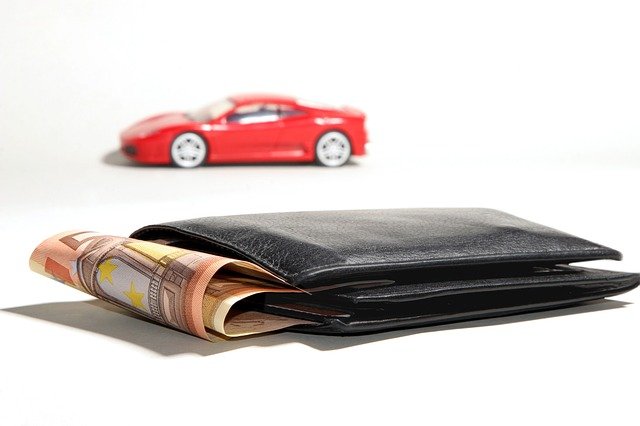
Is it easier to get a lease or a loan?
When buying a new car, it is easier to get a lease, which does not have conditions as strict as a loan. It is quicker and easier to arrange, but not cheaper. Because the leasing company will not check our ability to repay very thoroughly, we can easily get ourselves into trouble. With a loan, we only get an amount that matches our ability to repay. If we do not pay the lease instalments on time, the car will simply be taken away, because the owner is the leasing company, not us. In the case of a loan, the bank will “only” demand the money from us.
Getting a loan is more complicated, because the bank examines our financial situation thoroughly. However, this type of financing is always somewhat cheaper. In addition, the repayment period depends on an agreement between both parties, mainly on our ability to repay.
Watch out for special offers
We quite often come across special offers from leasing and instalment companies. These offers are often set up so that one component (interest, insurance) is reduced almost to zero, or a tempting benefit is added. Another component is then all the higher. After careful calculation, we find that the offer is not good value at all.
We should also look at the APRC (roční procentní sazba nákladů, RPSN), which the seller must always provide. It shows the real annual cost of the loan, including hidden fees. Under the Consumer Credit Act (zákon o spotřebitelském úvěru), we also have 14 days to withdraw from the contract.
Read our interesting article on how to get a cooperative flat.
USD amounts are approximate, converted at the Czech National Bank rate of 21.80 CZK per USD on 2 October 2026.
